
Selective demolition
Strip out an interior while protecting the structure and finishes you want to keep.
Discuss this project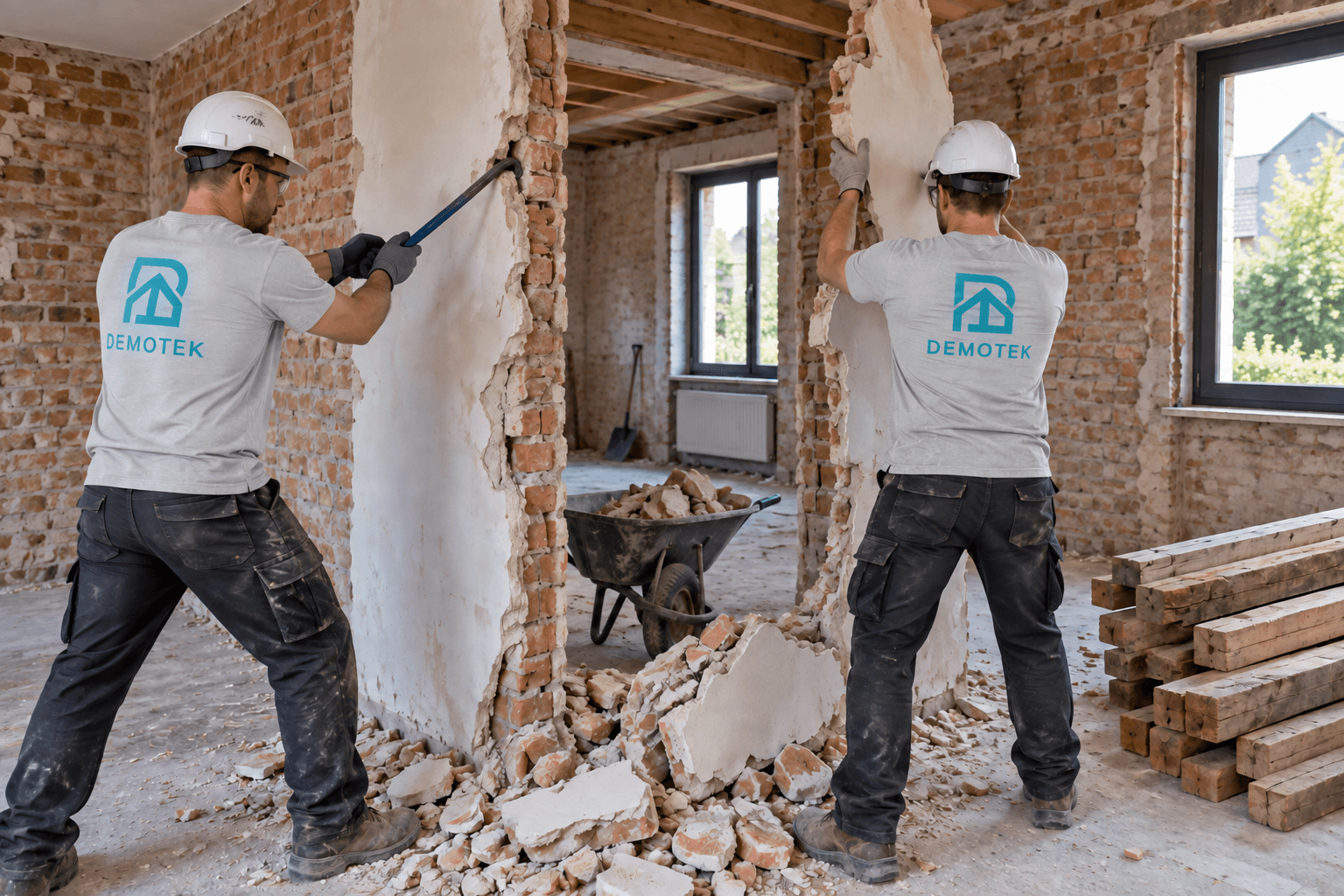
Interior strip-out
Renovation does not mean demolishing everything. Fixtures, finishes and non-load-bearing partitions can be removed selectively. Retained areas, access and dust control are defined beforehand. Any work on a load-bearing element requires a specific assessment by a structural specialist.
To strip out a kitchen, bathroom or apartment, distinguish fixtures, finishes and their substrates. A partition has a different role from a load-bearing wall. Items to salvage and rooms still in use must be included in the scope.
Prepare your quote
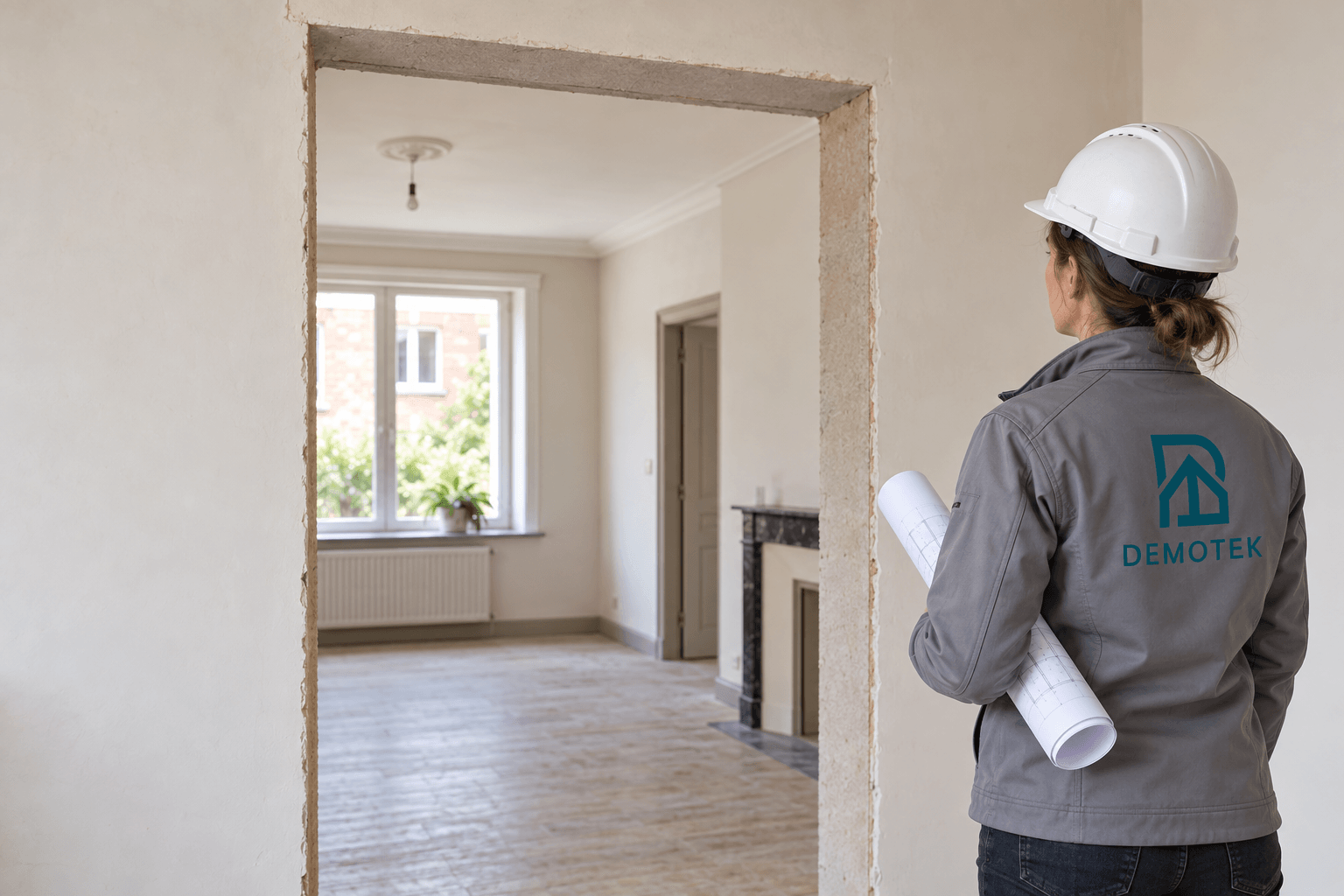
Describe the work room by room and identify doors, stairs or fixtures to keep. Separate removal of finishes, removal of substrates and new installations. Discuss storage of salvaged items and the waste route through shared areas before work. For an apartment, provide the co-ownership’s access rules and the protection expected in communal spaces.
- Rooms and layers to remove: finish, adhesive, substrate
- Elements to retain, salvage or protect
- Occupation and waste removal route
Before work starts
Before renovation, the materials affected by removal need asbestos checks suited to the work. Check your region’s planning rules: interior work is not automatically exempt from all formalities.
Asbestos rules and official sourcesYour questions
Can doors and sanitary fittings be kept?
Plan reuse before dismantling. Identify the items to keep, their condition and where they will be stored. Careful dismantling for reuse requires a different approach from removal for disposal.
How do I prepare for interior demolition in a flat?
Specify the floor, stair or lift access, shared areas and the building’s co-ownership rules. Ask for the protection of passages, waste route and use of remaining rooms to be described. Whether the flat can stay occupied must be assessed for your project.