
Prepare your project
A wall to open, a garage to remove or a suspect material discovered during renovation: identify the affected elements, what must stay and the checks needed before work.
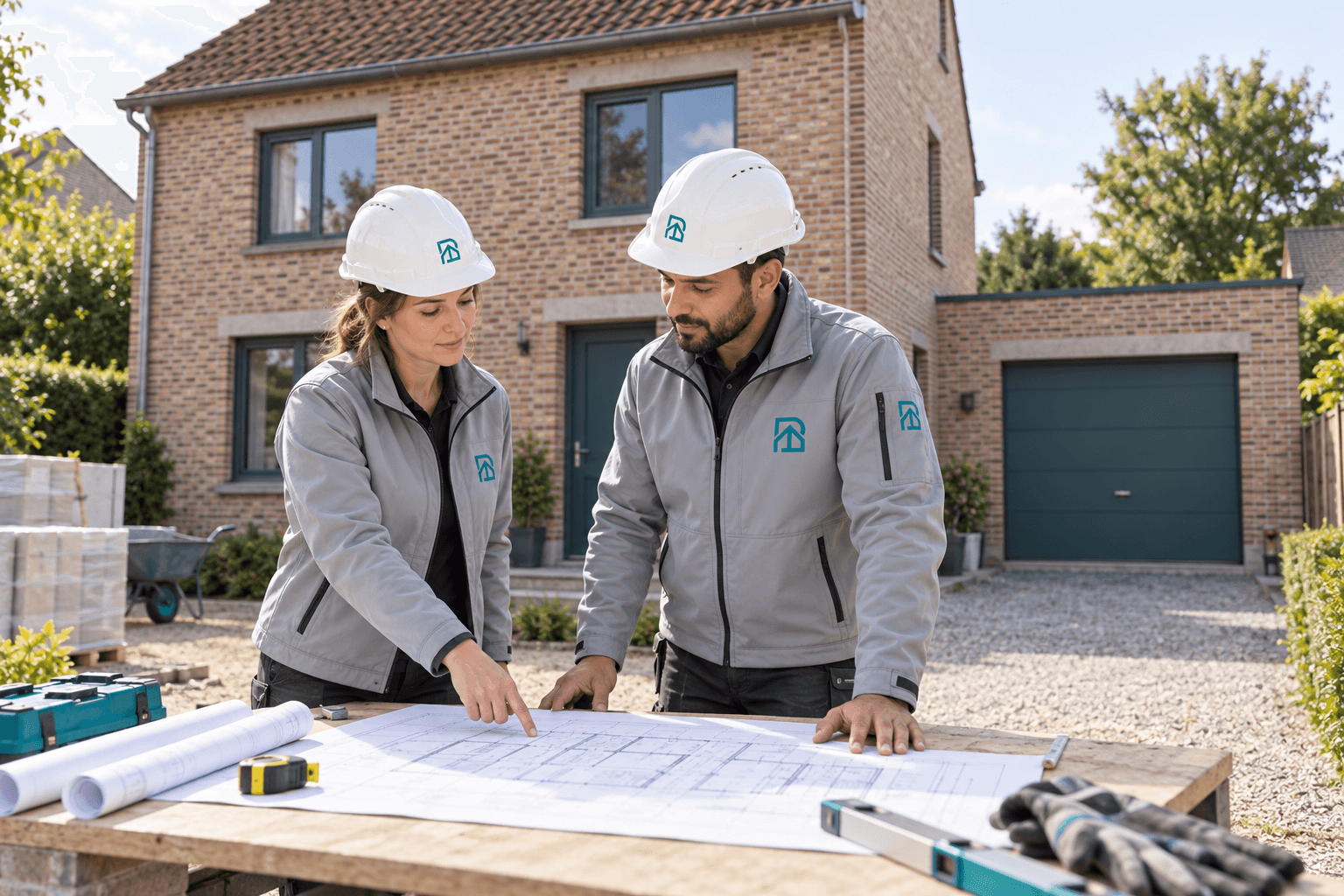
Find your situation.
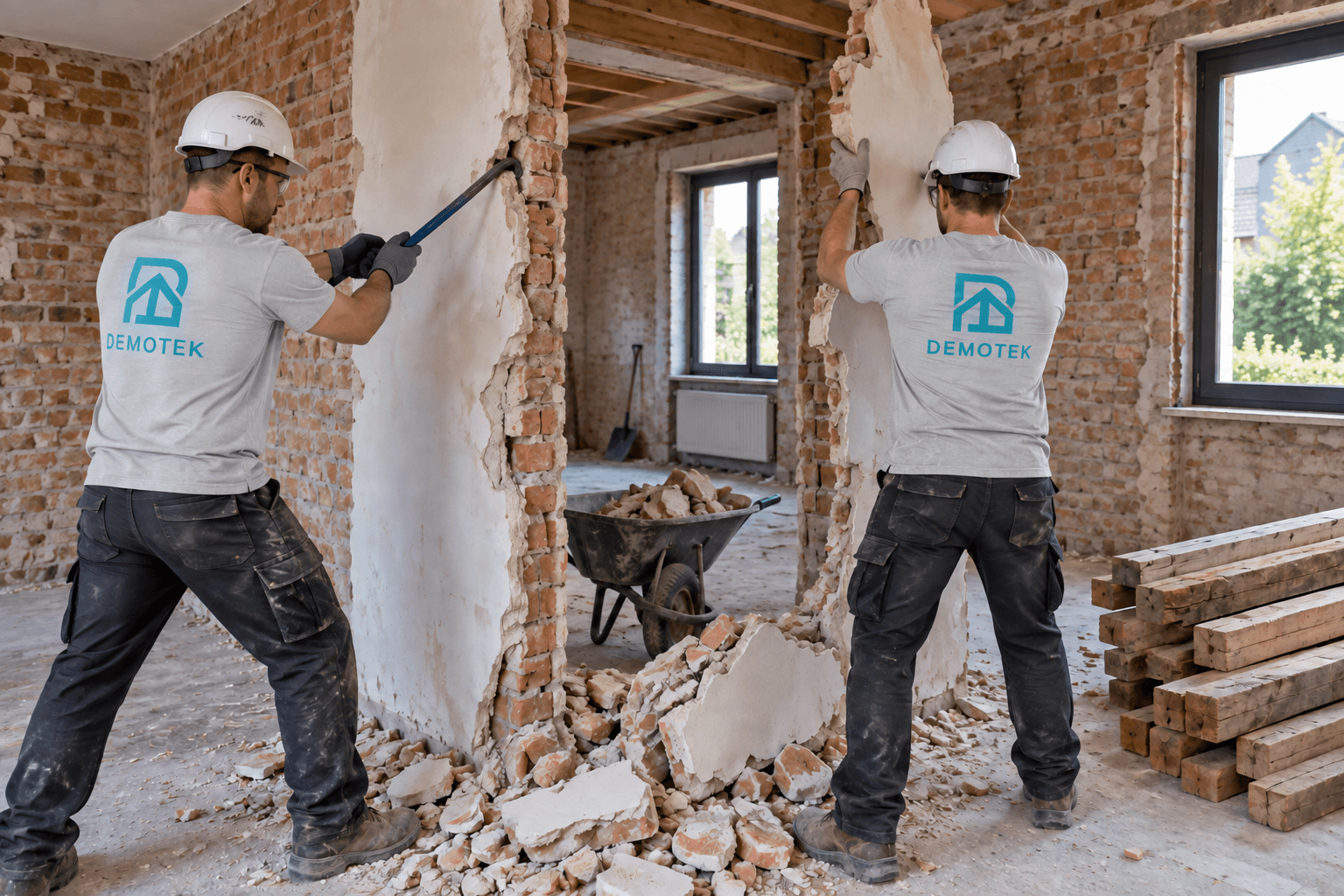
Selective demolition
Strip out an interior while protecting the structure and finishes you want to keep.
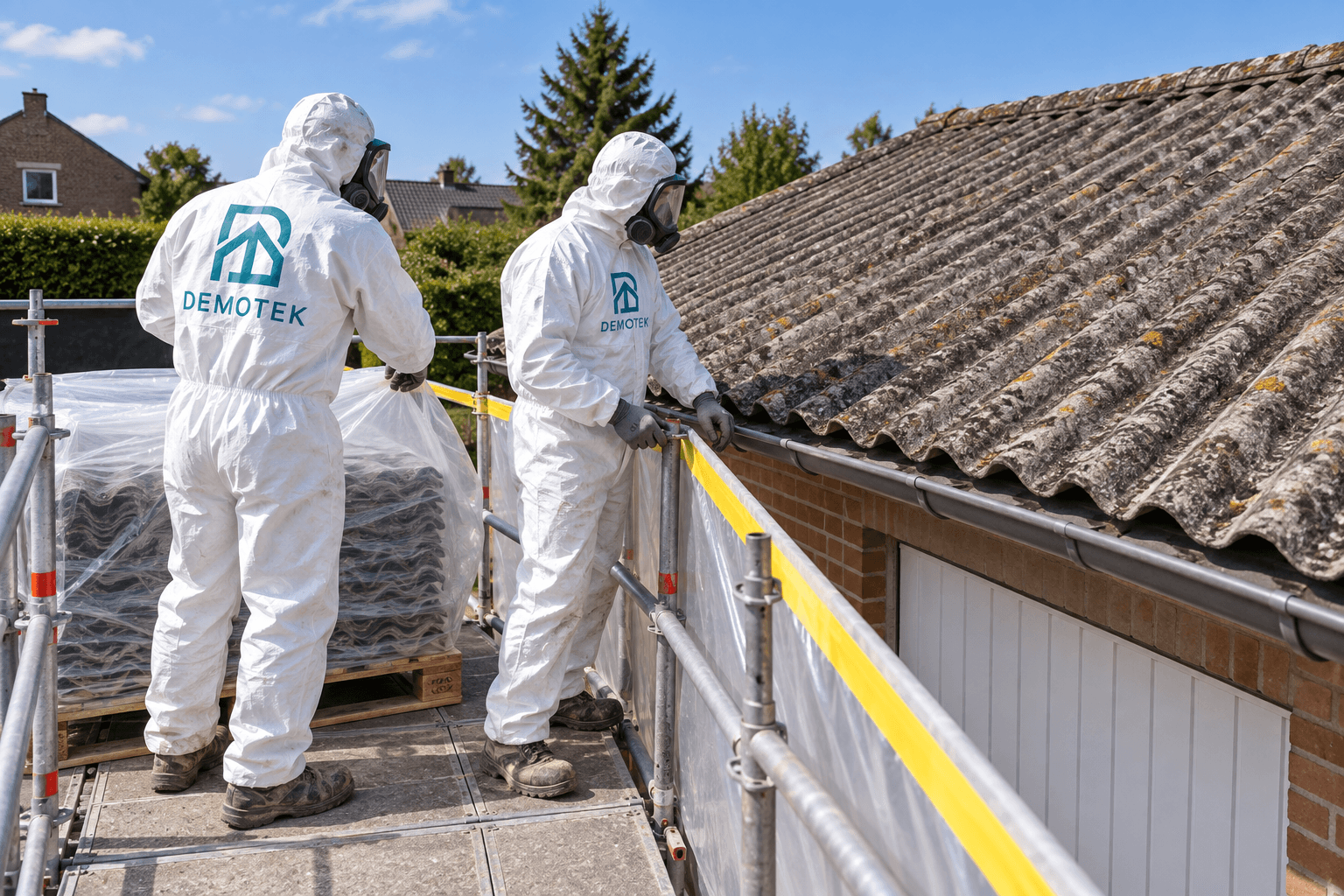
Asbestos roofs
Prepare the removal of asbestos-containing roof sheets or slates before replacing the roof.
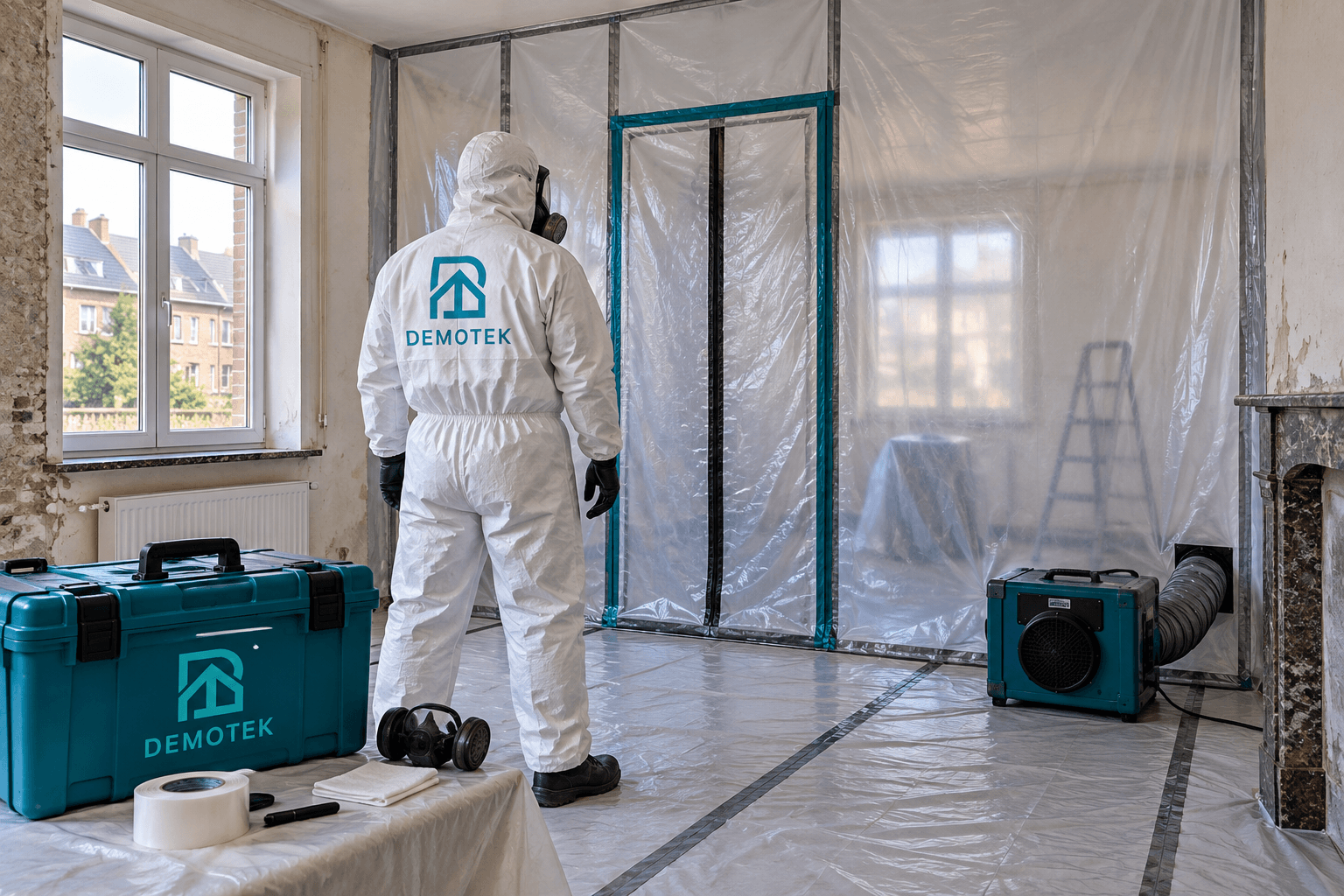
Asbestos & renovation
Clarify suspect interior materials before renovation disturbs them.
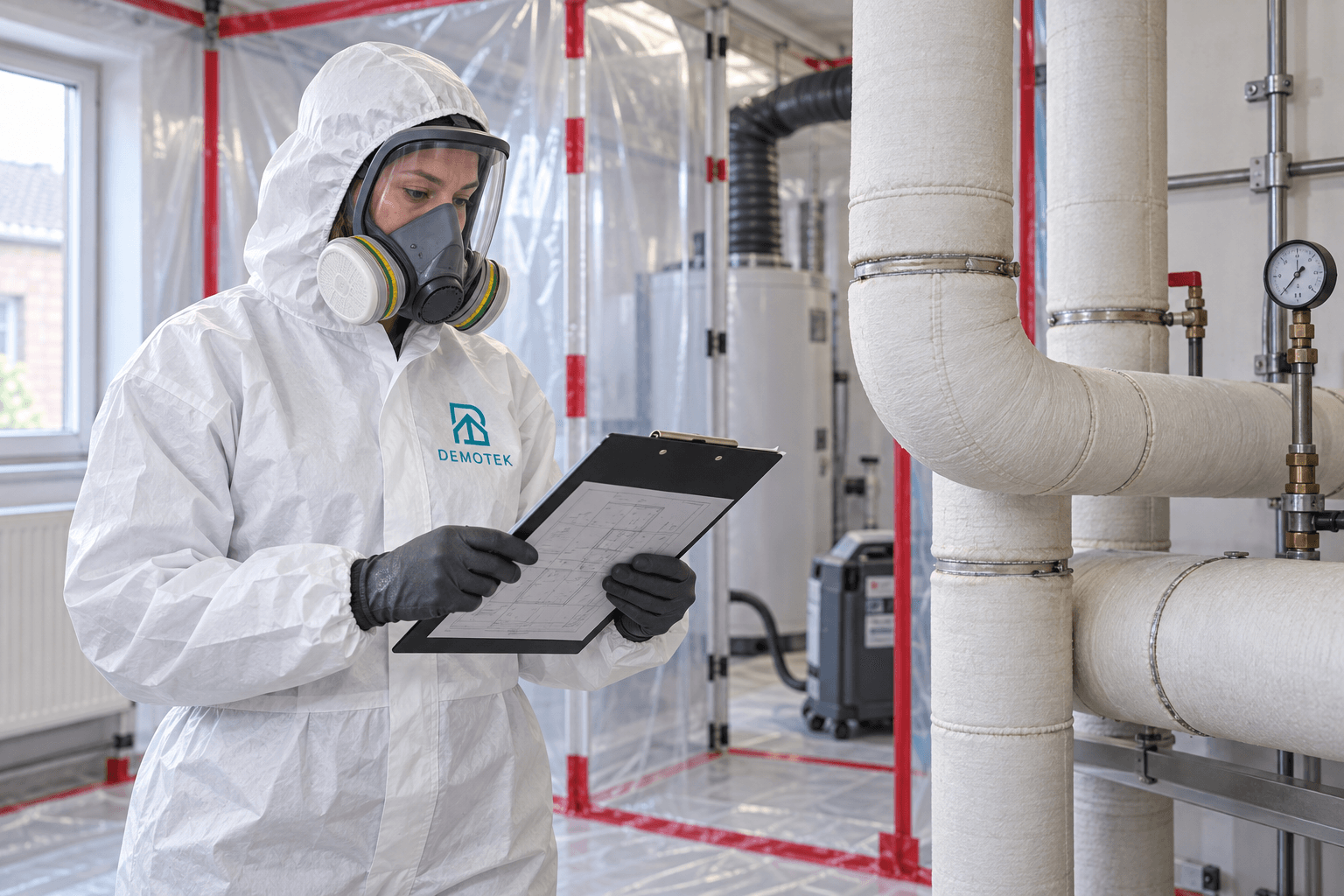
Asbestos pipe insulation
Prepare removal of asbestos-containing insulation using an appropriate approved method.
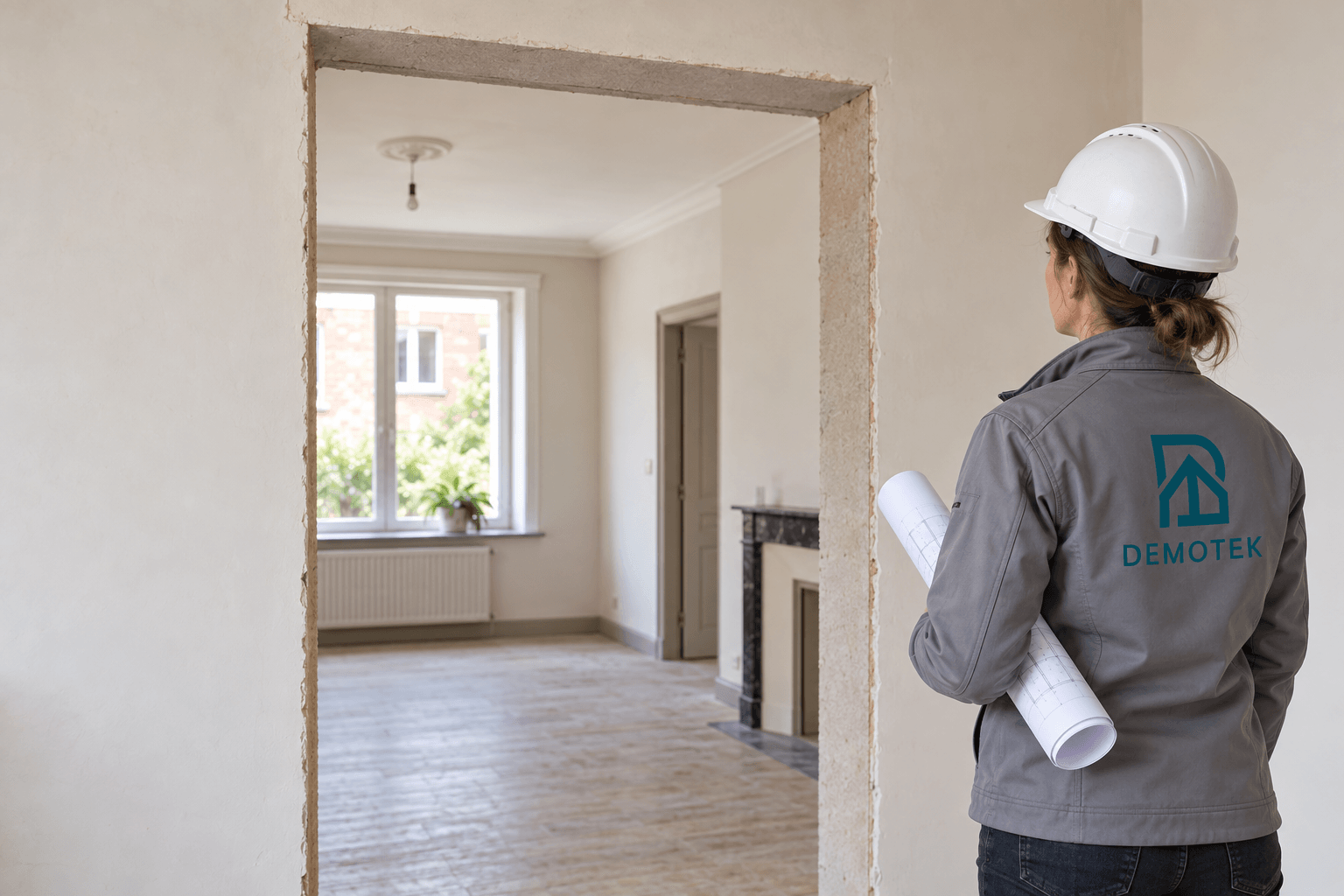
Opening walls & removing partitions
Distinguish a partition from a structural wall before planning the opening.
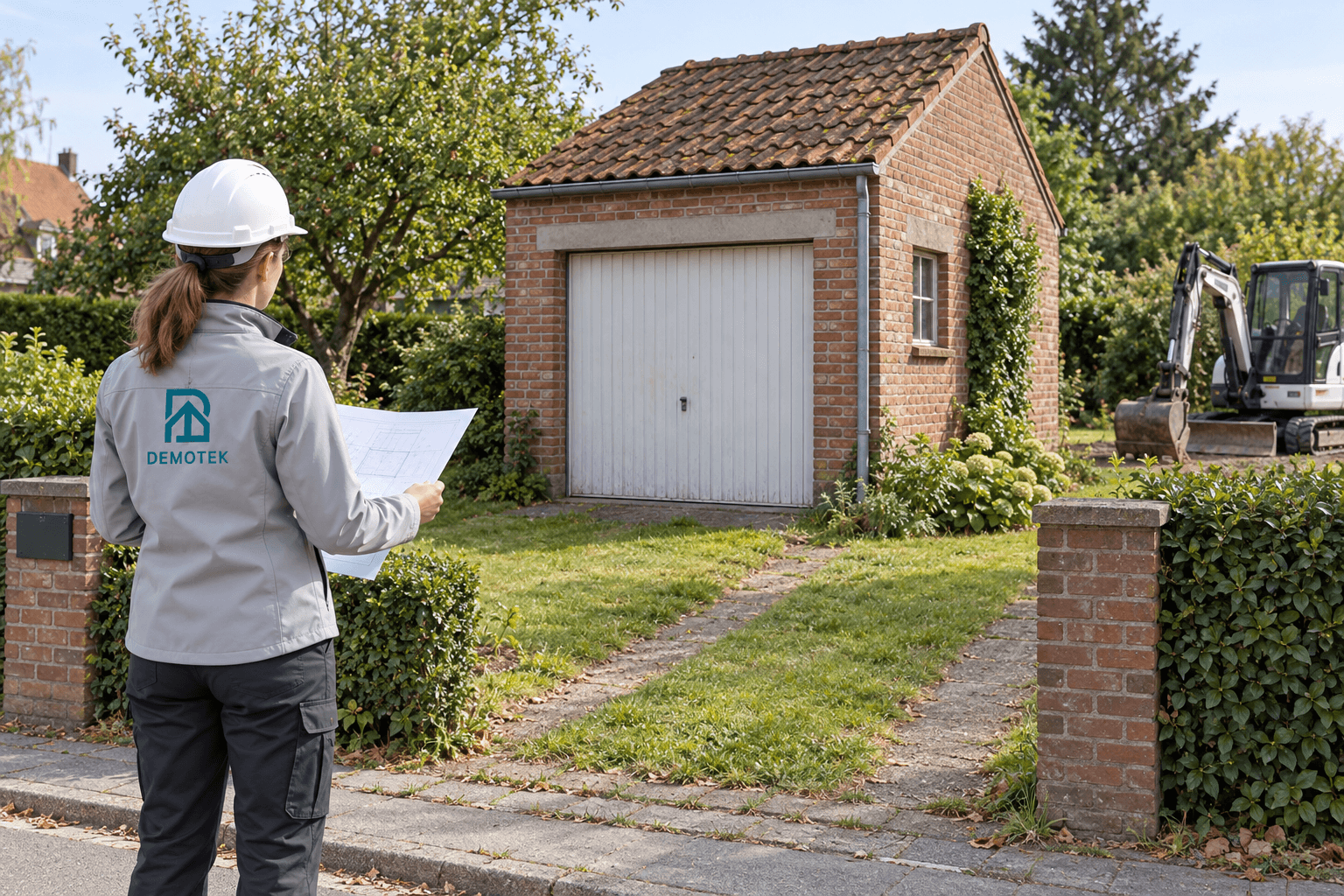
Garage & outbuilding demolition
Plan the structure, roof materials and site access as separate parts of the demolition.
Something unexpected?
Opening walls & removing partitions
Distinguish a partition from a structural wall before planning the opening.
Garage & outbuilding demolition
Plan the structure, roof materials and site access as separate parts of the demolition.
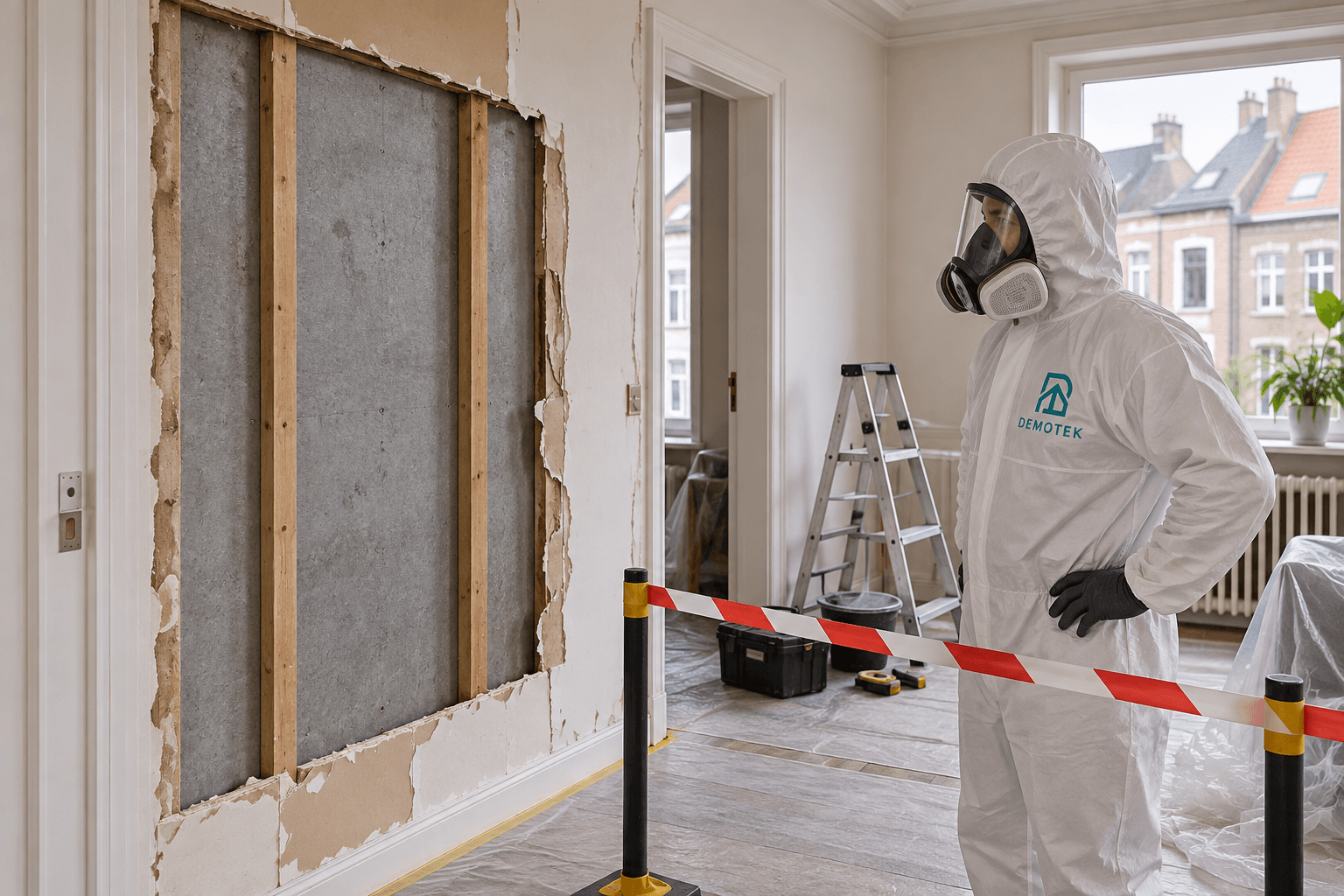
Suspect material found during work
Stop work on the newly exposed material and clarify the situation before continuing.
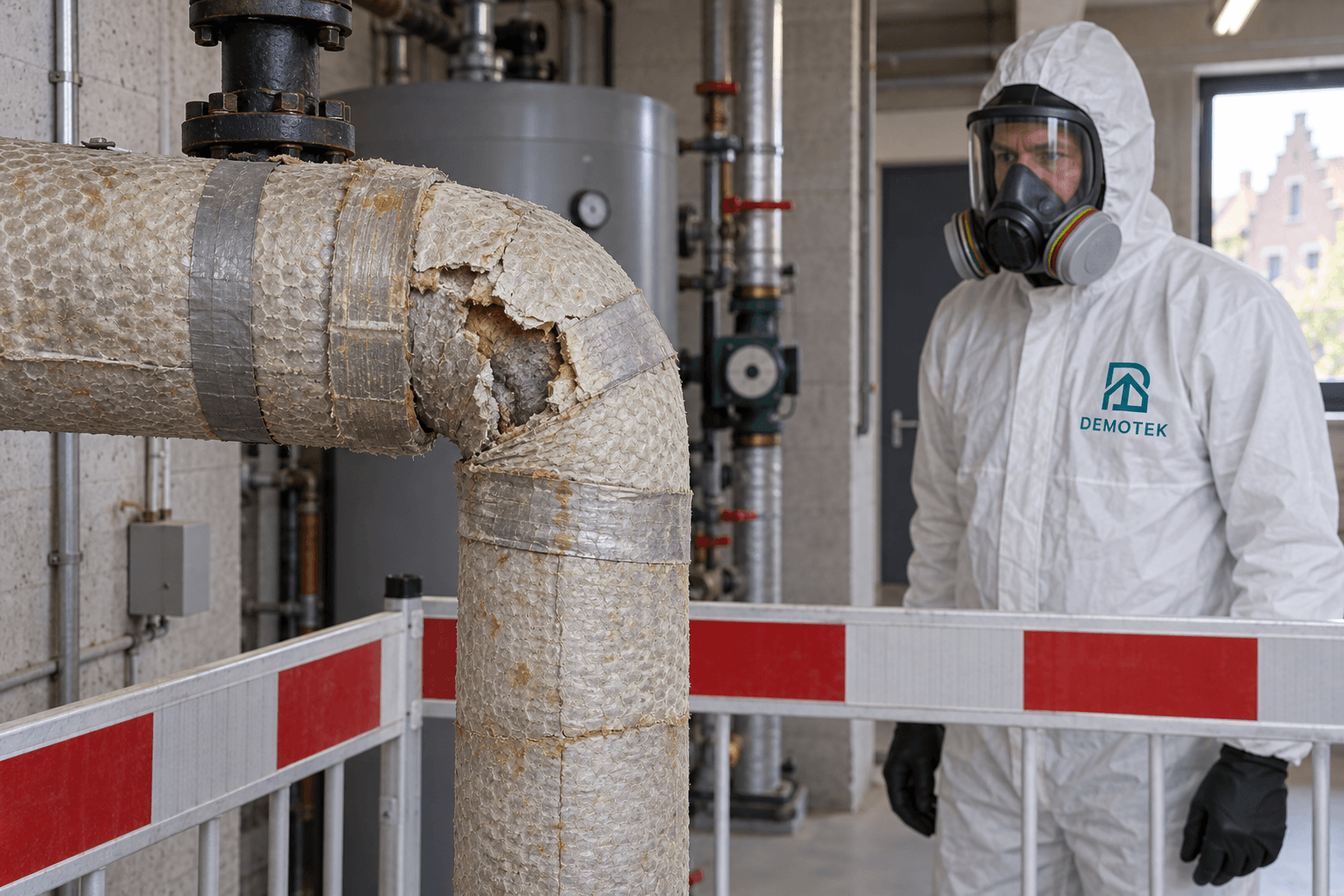
Damaged pipe insulation: what next?
Crumbling or disturbed suspect insulation needs assessment before any further intervention.
Before you begin
Prepare your project and quote.
Choose your situation to see the checks and information that matter.
Opening walls & removing partitions
Enlarging a room starts by distinguishing what divides spaces from what supports the building. An opening in a load-bearing wall needs a suitable study before any work.
Before work starts
Gather available plans, required dimensions and service information. A photograph or wall thickness alone cannot establish whether it is load-bearing. Mention any party wall, occupied room or finish to protect on the other side.
What matters for the quote
Structure, material, access and retained finishes determine scope. Required studies and permissions depend on your project. Separate cutting, any reinforcement, removal and finishing repairs: a rough opening is not a fully finished passage.
Official sources
Garage & outbuilding demolition
A small building needs precise preparation: machine access, connections, neighbouring walls and identification of the roof. Size alone does not determine how to dismantle it.
Before work starts
Specify what goes, what stays and street access. Suspect roofing or panels must be assessed before demolition. Confirm the permit or exemption with the municipality, including for an outbuilding. Mention electricity, water or drainage connected to a retained building: shutdown or continued use must be coordinated beforehand.
What matters for the quote
Access, neighbours, sorting and waste removal affect the quote. State whether the slab and foundations are included. For a shed at the back of a garden, describe the route to the street and landscaping to protect: a small area with narrow access may require more handling.
Official sources
Selective demolition
Removing partitions, floors or fixtures while keeping the rest requires clear site boundaries. Suspect materials must be examined before removal.
Before work starts
List affected rooms, retained elements and occupation constraints. Old finishes, adhesives or plaster cannot be identified by appearance alone. For a new floor, distinguish covering, adhesive and screed: checking one layer does not necessarily describe the others. Mention known underfloor heating too.
What matters for the quote
Areas, floors, material routes and protection of retained parts matter as much as demolition itself. In a kitchen or bathroom, distinguish fixtures, finishes and substrates. Specify whether furniture, tiles and screed removal form part of the project.
Official sources
Asbestos roofs
Corrugated fibre-cement sheets or slates: before replacing a roof, clarify the materials involved. Any removal and the new covering are two stages with responsibilities to define.
Before work starts
Send the municipality, approximate area and existing reports. Do not climb onto the roof or take samples to complete the enquiry. Mention an adjoining conservatory, solar panels or shared passage. Specify who handles the new covering and how the transition between contractors will be organised.
What matters for the quote
A square-metre price must specify area, access at height, removal and transport to the treatment route. Compare identical scopes: analyses, new covering and insulation may be separate items.
Official sources
Asbestos pipe insulation
Some pipe insulation in a cellar or boiler room may contain asbestos. Not all insulation does: a competent professional must assess composition and condition.
Before work starts
Do not scrape or open the pipe covering. Describe available documents and intended work. Specify whether it concerns a boiler, one insulated pipe or several networks, and whether installations must remain operational. We first discuss your needs to identify the right contact.
What matters for the quote
OVAM reserves asbestos pipe-insulation removal for approved companies. Have the offer identify the contractor and chosen method. Distinguish insulation removal, heating work and any replacement insulation.
Official sources
Asbestos & renovation
The location helps describe the project; the material determines the checks. A pipe, panel, wall plaster or floor covering may require different interventions.
Before work starts
Specify the room, affected element and intended action: removal, drilling or demolition. Compare any existing survey or certificate with the actual scope. For an attic, distinguish lining, panels and floor; for a cellar, pipes, plaster and equipment. These are elements to assess, not confirmation of asbestos.
What matters for the quote
Identifying affected elements, their accessibility and removal scope helps prepare a useful enquiry without assigning one price to a whole room. Describe stairs, access hatches and equipment that must remain accessible. Distinguish protection of passages from reinstatement after removal.
Official sources
Understanding building-work terms
Strip-out and selective demolition
Strip-out removes fixtures and non-structural interior elements within the agreed scope. Selective demolition organises dismantling and separation of materials. Reuse means using an element again; recycling transforms the material. Any asbestos removal remains a separate operation to prepare.
Pipe insulation
Thermal insulation around pipes or equipment, particularly heating systems. The term does not automatically mean asbestos. Some old insulation may contain friable asbestos, so the material and condition must be assessed before intervention.
Fibre cement and asbestos cement
Fibre cement combines cement and fibres. Some older applications used asbestos fibres, hence asbestos cement. Corrugated fibre-cement sheets or slates therefore do not automatically contain asbestos. Appearance alone cannot determine how to remove them.
Pre-work asbestos inventory
It must describe materials affected by the planned intervention. A sale certificate or visual inventory may exclude concealed elements. Send the work programme to the expert to determine further investigation, including layers that the work will affect.
A material’s appearance is not proof of asbestos. Use existing reports and have a competent professional arrange any necessary analysis. The official references explain the scope of the checks.
Planning demolition?
A building, outbuilding or interior? Tell us about it in three answers.
Your project still needs to be discussed. This guide confirms no price or start date.